
Step by Step
Why we look so closely at the tooth neck
Keep scrolling to see what happens during a professional tooth cleaning: from barely visible plaque to a smooth, polished surface.
Professional cleaning in about 60 minutes, 140 to 160 € out-of-pocket amount.
Who treats you
Specially trained prophylaxis specialists under dental supervision at the Zahnkompetenzzentrum Dr. Strößner.
First Appointment
Examination and explanation of your cleaning needs, followed by the dental cleaning (about 60 minutes).
Costs
Professional dental cleaning is a private service; many insurers pay a share. With us, it costs 140 to 160 € out of pocket, depending on the effort.
First Step
Appointments online around the clock (“Appointment” button) or by phone during opening hours on 03443 339 65 54.
“Professional dental cleaning (PZR) is one building block of prevention against tooth decay and periodontitis.”
Step by Step
Keep scrolling to see what happens during a professional tooth cleaning: from barely visible plaque to a smooth, polished surface.
01
02
03
Dental cleaning is not cosmetics – it is medical prevention. German professional societies and the Bundeszahnärztekammer (Federal Dental Association) recommend professional dental cleaning (PZR) as an integral part of oral health. Many private and statutory health insurers now contribute a share of the cost.
Short videos in which our team answers the questions we're asked most often. No jargon, no sales pressure.
The videos provide general information and do not replace individual advice or examination. The course and outcome of treatment depend on personal circumstances; medicine offers no guarantee of success. All videos have subtitles.
Professional Dental Cleaning in Weißenfels
Professional dental cleaning (PZR) is a systematic cleaning of every tooth surface, carried out by trained specialist staff, achieving a result that cannot be reached to the same extent through home care alone. It goes considerably further than daily brushing with a toothbrush, floss, and interdental brushes, and is a key element of modern dental preventive care. At the Zahnkompetenzzentrum Dr. med. dent. M.Sc. Sandro Strößner in Weißenfels, we see professional dental cleaning not as an isolated, stand-alone service, but as part of a well-thought-out preventive care concept tailored to each patient's individual oral health.
The biological background is easy to follow: every day, a sticky biofilm made up of food residue, saliva components, and above all bacteria builds up on the teeth and along the gum line – the familiar dental plaque. If this biofilm is not removed regularly and thoroughly, it mineralises into tartar within a few days, which can no longer be removed with a toothbrush. Deposits collect particularly in hard-to-reach places – in the spaces between teeth, along the gum margin, in the pits and fissures of the chewing surfaces, and behind the front teeth – and are often overlooked in everyday brushing.
This is exactly where professional dental cleaning (PZR) comes in. The bacteria living in plaque metabolise sugar into acids that attack tooth enamel – this is the starting point for tooth decay. At the gum margin, in turn, bacteria can settle that may initially promote gum inflammation (gingivitis) and subsequently inflammation of the entire periodontium (periodontitis). Periodontitis often progresses painlessly and unnoticed at first, but can cause lasting damage to the periodontium. The aim of professional dental cleaning is to thoroughly reduce this bacterial biofilm and so create the conditions in which teeth and gums can be kept well cared for.
Professional dental cleaning therefore follows a preventive approach: it helps to reduce the risk of decay and inflammatory gum disease by regularly and professionally removing the main cause – bacterial plaque. For patients, this means a fixed, plannable part of preventive care that fits well into everyday life.
Explained step by step
At our practice in Weißenfels, professional dental cleaning follows a structured process. The individual steps build on one another – from a careful assessment of findings, through the actual cleaning, to the final polish and fluoride application. Depending on the starting situation, the number of teeth present and the findings, professional cleaning usually takes around an hour. Below, we describe the typical process as patients experience it with us.
Throughout the entire process, we make sure that you feel comfortable and are kept informed about each step. Sensitive areas are treated with particular care; our team is on hand at any time for questions or concerns. If you tend to find treatment uncomfortable, you can mention this beforehand – we adapt the pace and the breaks to how you are feeling.
Modern Techniques in Detail
The quality of a professional dental cleaning depends largely on choosing the right method for each type of plaque and each area of the mouth. At our practice in Weißenfels, we combine various techniques that complement one another. Below, we explain the main methods and their respective purposes, so that you can understand what happens during your treatment.
Ultrasonic devices generate fine, high-frequency vibrations at the tip of the instrument. These vibrations loosen hardened tartar from the tooth surface, while a jet of water simultaneously rinses away the loosened particles and cools the tip. Ultrasonic technology is particularly well suited to removing larger amounts of firmly attached deposits efficiently and comparatively gently, before the fine work with hand instruments begins.
Specially shaped hand instruments are used for precise, fine cleaning. Scalers and curettes are designed to reach into narrow areas along the gumline and the spaces between teeth. They allow any remaining plaque to be removed in a targeted, controlled way – an important step, as ultrasound alone does not fully reach every area.
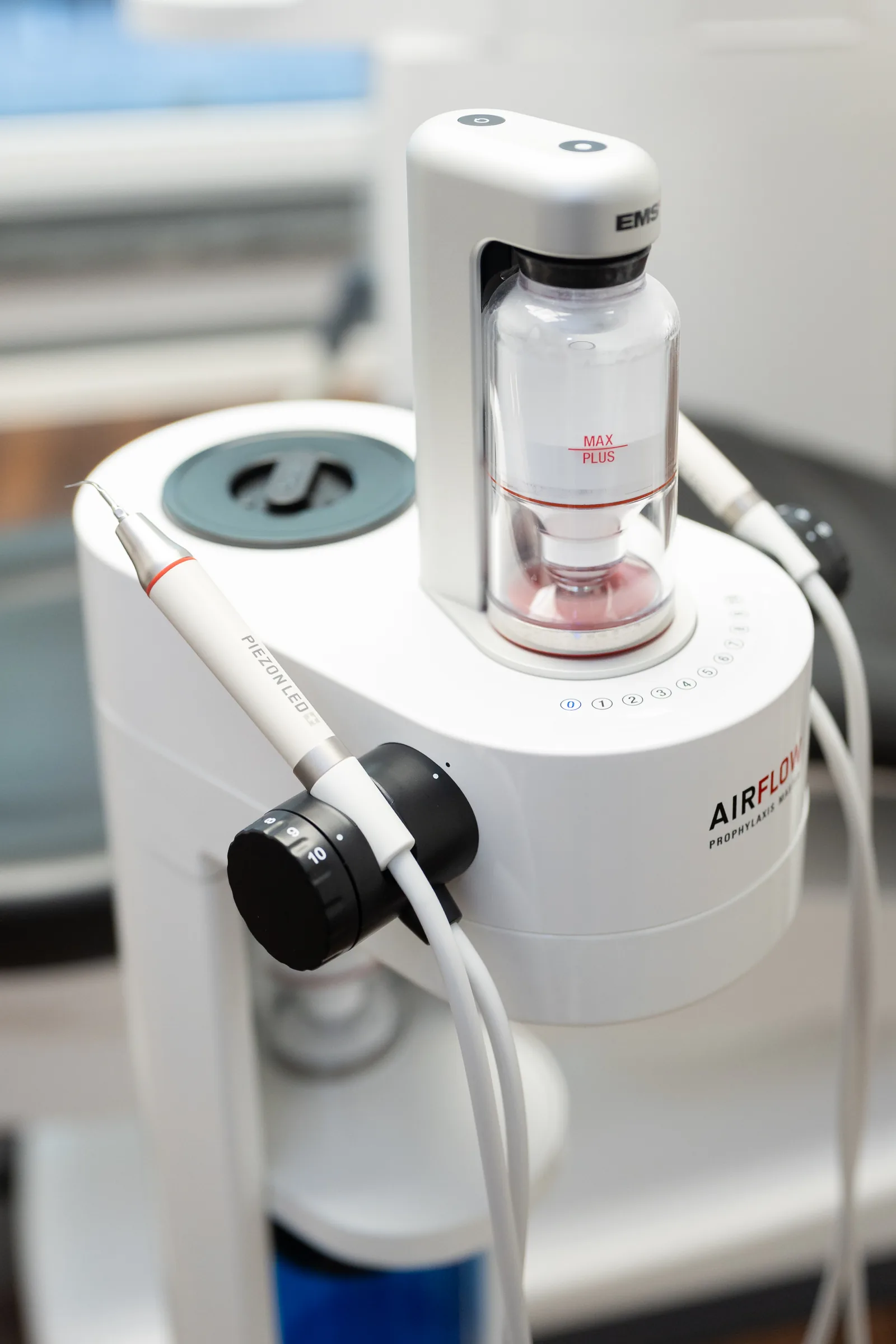
With the air-polishing (Airflow) method, a fine mixture of air, water and a special powder is sprayed onto the tooth surface. This method removes soft plaque and surface staining particularly gently – including in hard-to-reach areas, on implant crowns, or around orthodontic appliances. It is well suited to reducing staining caused by coffee, tea, red wine or tobacco.
After plaque and deposits have actually been removed, the teeth are polished. Fine polishing pastes and rotating attachments smooth the surfaces. A smooth tooth surface gives new plaque less to hold on to, so plaque builds up again more slowly afterwards. At the same time, teeth noticeably feel smoother after polishing.
The finishing step is fluoridation with a varnish, gel or foam. Fluoride is absorbed into the outermost layer of enamel and helps strengthen its resistance to the acids produced by plaque bacteria. This final step rounds off the professional dental cleaning and is an important part of preventive care.
Home Care and Professional Cleaning Working Together
A common question we hear at our practice is: if I brush my teeth thoroughly, do I even need professional dental cleaning? The answer lies in what each of the two measures can, and cannot, achieve. Oral hygiene at home and professional dental cleaning are not in competition with one another, but two complementary building blocks. Neither can replace the other – together, they form the basis of well-considered preventive care.
Daily care at home is, and remains, the foundation of oral health. Brushing twice a day with fluoride toothpaste, regular cleaning between the teeth with dental floss or interdental brushes, and a tooth-friendly diet cannot be replaced by anything else. They ensure that the bacterial biofilm cannot build up unhindered in the first place. However, care at home does have natural limitations.
Even with very careful care, some areas remain that a toothbrush and floss can barely reach fully – such as deep areas along the gum line, crowded teeth, the inner surfaces of the front teeth, or the area around dental prosthetics and brackets. What's more, once plaque has hardened into tartar, it can no longer be removed with a toothbrush. This is exactly the gap that professional cleaning closes, with its professional instruments and techniques.
Another benefit of professional dental cleaning is the individual feedback it provides. Staining the plaque reveals where your at-home care could still be improved. Our team gives specific tips tailored to your situation on brushing technique, choice of aids and cleaning between the teeth.
Intervals and Recall
How often a professional dental cleaning is advisable cannot be answered the same way for everyone across the board – it depends on individual oral health. As a general guide, an interval of around two cleanings a year applies for many adults. Depending on your personal situation, a shorter or longer interval may make sense. At the Zahnkompetenzzentrum Dr. Strößner, we agree the interval with you individually.
Several factors play a role in determining the right interval: the tendency to develop tartar, the condition of the gums, the presence of dental restorations, implants or orthodontic appliances, general health factors, and individual habits such as the consumption of coffee, tea or tobacco. Particular phases of life can also change what is needed. People with an increased risk of gum inflammation, or who have already been treated for periodontitis, often benefit from more frequent check-ups.
To make sure regular check-ups work reliably, we use a recall system. Recall means that we actively remind you of your next preventive appointment once the agreed interval is reached. This means no one has to keep track themselves, and professional dental cleaning remains a fixed, plannable part of your personal health routine. In everyday life, it is easy to lose track of the next appointment otherwise – the recall system provides reliability and continuity here.
This concept of an individually tailored interval, structured cleaning and active reminders is at the heart of modern prophylaxis. Its aim is to support oral health over the long term, rather than only reacting once problems arise. For our patients, this means continuous care with clearly planned appointments.
Oral and General Health
Dental research has long examined the connection between oral health and general wellbeing. Inflammatory processes in the mouth, such as pronounced periodontitis, are considered in relation to general health. Good oral hygiene and regular preventive care are therefore part of an overall health-conscious lifestyle.
Healthy gums, free of inflammation, are the foundation for stable teeth. If bacterial plaque remains permanently along the gumline, inflammation can develop, which often initially goes unnoticed. Professional dental cleaning helps to reduce the bacterial load and support the gums in staying healthy. This makes professional cleaning a preventive contribution that goes well beyond the mere aesthetics of clean teeth.
At the Zahnkompetenzzentrum Dr. Strößner, we take a holistic view of preventive care. For us, professional dental cleaning is one building block with which we support you in looking after your oral health as part of your overall wellbeing. For questions about your individual situation, we are happy to advise you in a personal conversation.
Costs and Reimbursement
A frequent and justified question concerns the cost of professional dental cleaning. For patients with statutory health insurance, professional dental cleaning is, as a rule, classed as an optional health service (IGeL) and is billed according to the Gebührenordnung für Zahnärzte (GOZ, Dentists' Fee Schedule). The specific amount depends on the effort involved – in particular on the number of teeth to be cleaned and the initial situation. At our practice, professional dental cleaning takes about 60 minutes and costs 140 to 160 € as an out-of-pocket payment, depending on the effort involved; for children and adolescents, 88 €.
The level of cost depends on the individual work involved and is calculated according to the GOZ. Many statutory health insurers now voluntarily contribute towards the cost of professional dental cleaning (PZR) – for example, through bonus programmes or subsidised preventive-care packages; the type and extent vary from insurer to insurer. Privately insured patients and those with suitable supplementary dental insurance are reimbursed in full or in part depending on their policy. We recommend checking directly with your health insurer or insurance provider before your appointment, to find out whether and to what extent a subsidy is possible. Before treatment, we will inform you transparently about the expected costs.
Distinct from the voluntary subsidy towards professional cleaning is the dental dental bonus booklet (Bonusheft). Anyone who has their regular annual check-ups documented without gaps in the dental bonus booklet (Bonusheft) can benefit from an increased fixed subsidy from their statutory health insurer for later dental prosthetics. The dental bonus booklet (Bonusheft), in other words, rewards consistency in prevention. Even though professional cleaning itself is not a mandatory service under statutory health insurance, the regular check-up visit to the dentist is closely tied to the idea of prevention – and it is exactly this visit that is recorded in the dental bonus booklet (Bonusheft).
Because the rules vary from insurer to insurer and from policy to policy, it is worth taking a brief look at your own terms. Ask your health insurer whether there is a bonus or subsidy scheme for professional cleaning, and, if you have supplementary dental insurance, check the agreed scope of cover. Our team in Weißenfels is happy to help set out the services provided in a clear, traceable way, so that you have a solid basis for clarifying matters with your insurer.
Your Prophylaxis Appointment in Weißenfels
Anyone in Weißenfels and the surrounding area looking for professional dental cleaning will find a reliable point of contact for prophylaxis and preventive care at the Zahnkompetenzzentrum Dr. med. dent. M.Sc. Sandro Strößner. Our practice is easy to reach. With us, professional dental cleaning is embedded in a holistic preventive concept tailored to your individual situation.
Our trained prevention team takes the time for your oral health. From the initial assessment through each cleaning step to the final consultation, we look after you attentively and explain the treatment clearly. We want you to feel well cared for and to go home with a fresh, clean feeling in your mouth. We respond individually to particular wishes and sensitivities.
Would you like to book an appointment for a professional dental cleaning, or do you have questions about prophylaxis at our practice? Feel free to call us on 03443 339 65 54. Our team will advise you on the options, answer your questions about the process and cost, and find a suitable appointment with you. This way, you can make regular prevention a fixed part of your health routine.

Professional dental cleaning (PZR) is one building block of prevention against tooth decay and periodontitis. At our Zahnkompetenzzentrum in Weißenfels, our prophylaxis team carries out professional dental cleaning using ultrasound, air-polishing technology (AIRFLOW®), and hand instruments. Hard deposits, soft plaque, discolouration from coffee, tea, or nicotine, and bacterial biofilms between the teeth are gently removed.
We then polish the teeth to a high shine, so that new plaque finds it harder to build up. Fluoridation strengthens the tooth enamel. A professional dental cleaning with us takes about 60 minutes. For a healthy set of teeth, we recommend two appointments a year; for those at risk of periodontitis or with implants, three to four.
What convinced me was the absence of marketing. No promises. Just planning, explanation, execution. I had eight implants placed and didn't even feel like I'd made a difficult decision.
At the Zahnkompetenzzentrum
Dentist in Weißenfels, Special Focus on Implantology
Your Local Practice
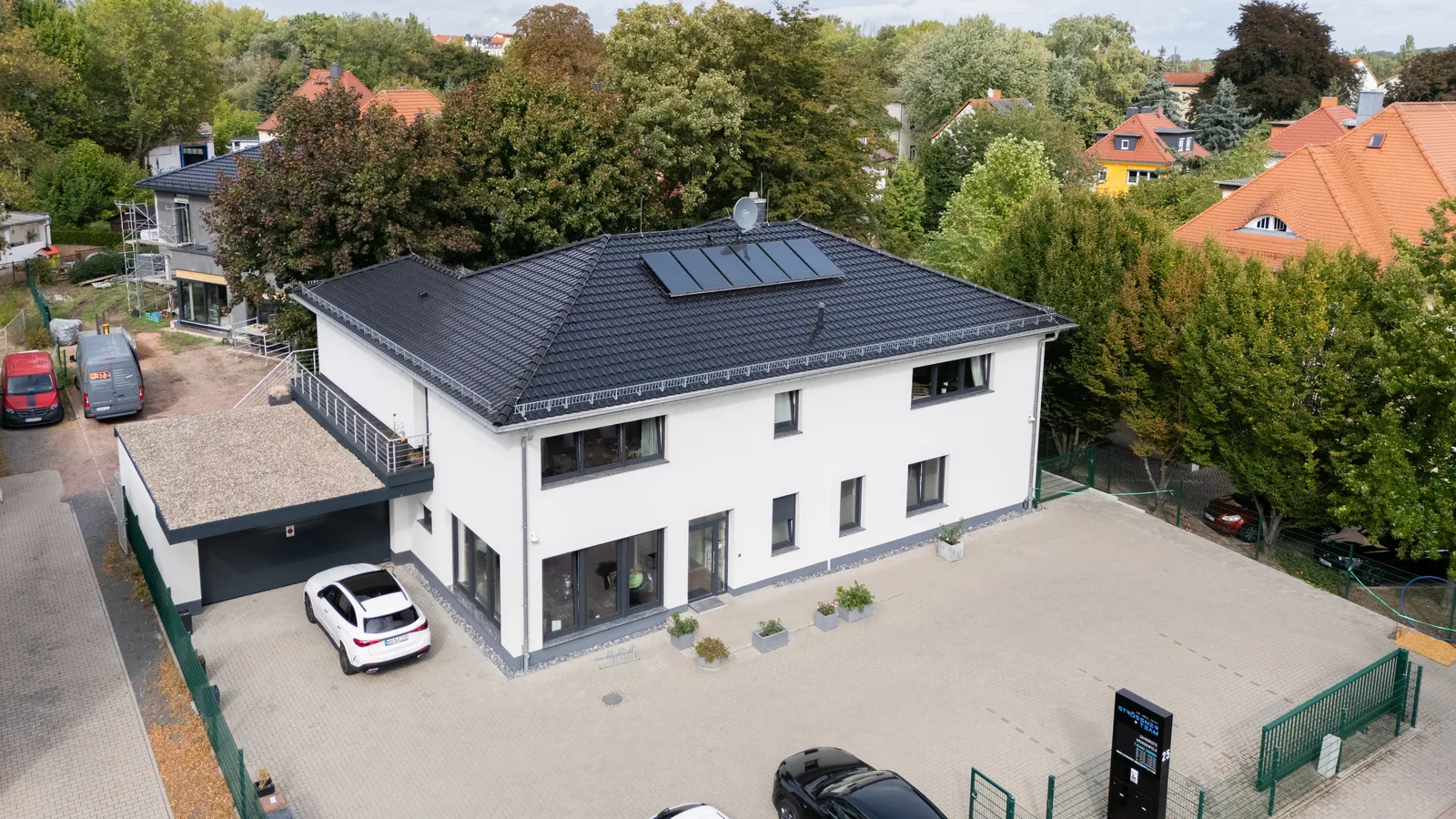
Zahnkompetenzzentrum in Weißenfels, Saxony-Anhalt
All Services at a Glance
Dental Cleaning and Prevention
Out-of-pocket amounts listed openly
Get practical dental health tips and news from our practice — free, and you can unsubscribe at any time.
